Etching & Printmaking
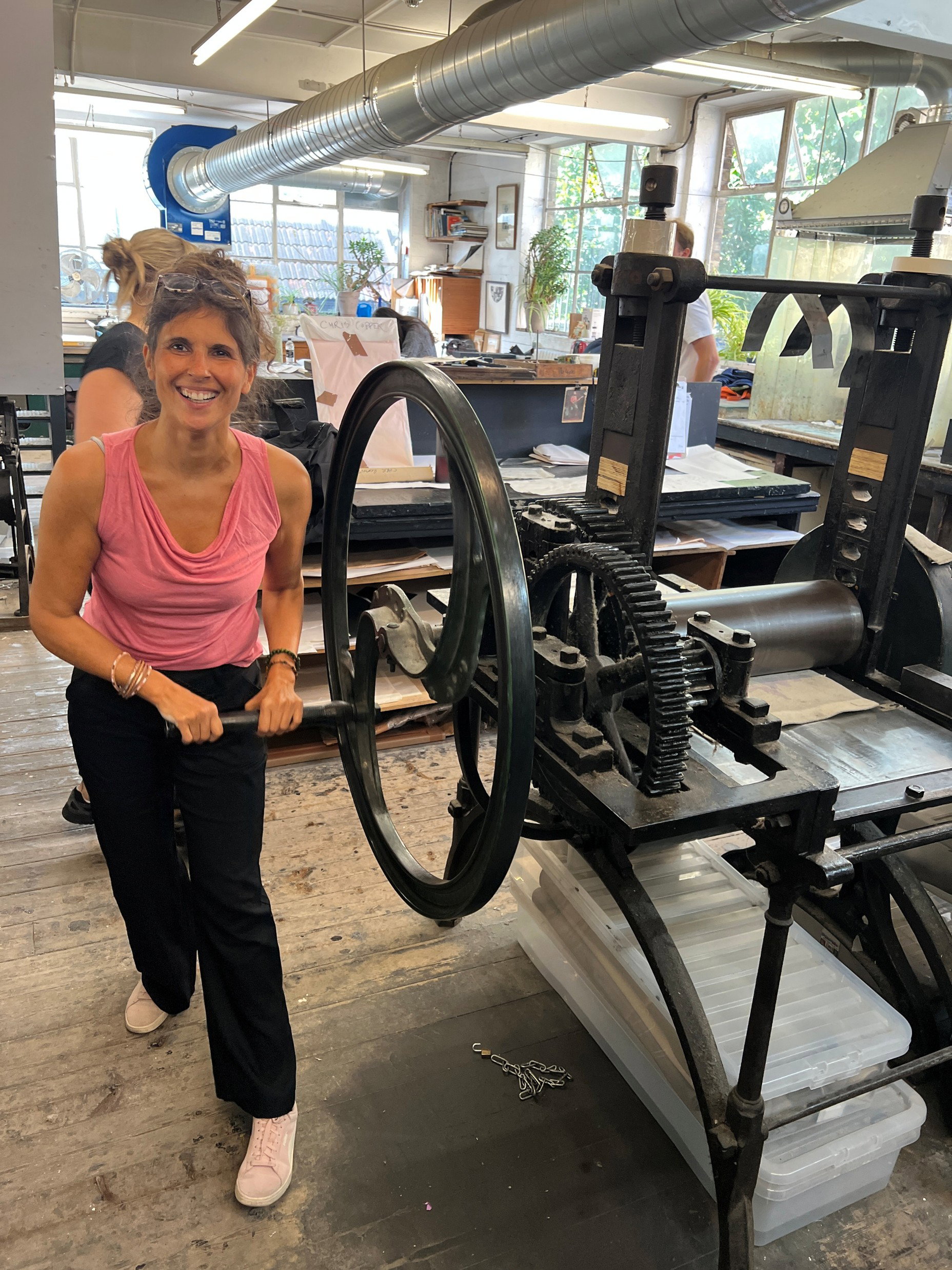
This was my first experience of etching and I absolutely LOVED LOVED LOVED it.
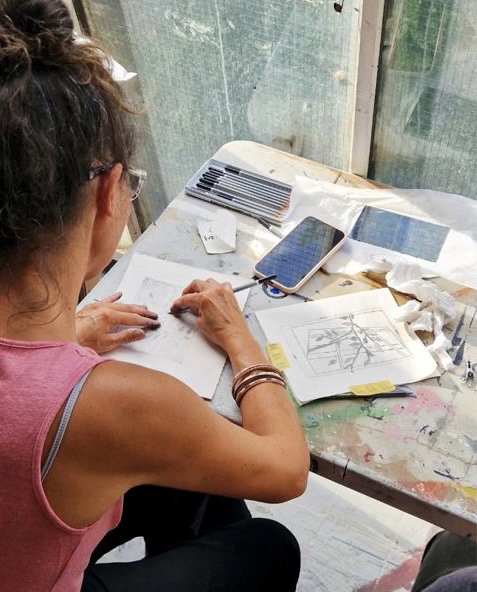
We learned the different stages of the process and techniques, from creating the image and preparing the plate to applying the ink and finally making the print.
There was something really satisfying about the whole process, particularly not knowing exactly how the image would look until the print was revealed. I loved the combination of technique, texture and unpredictability, and definitely wanted to do more.
RESEARCH & PLANNING
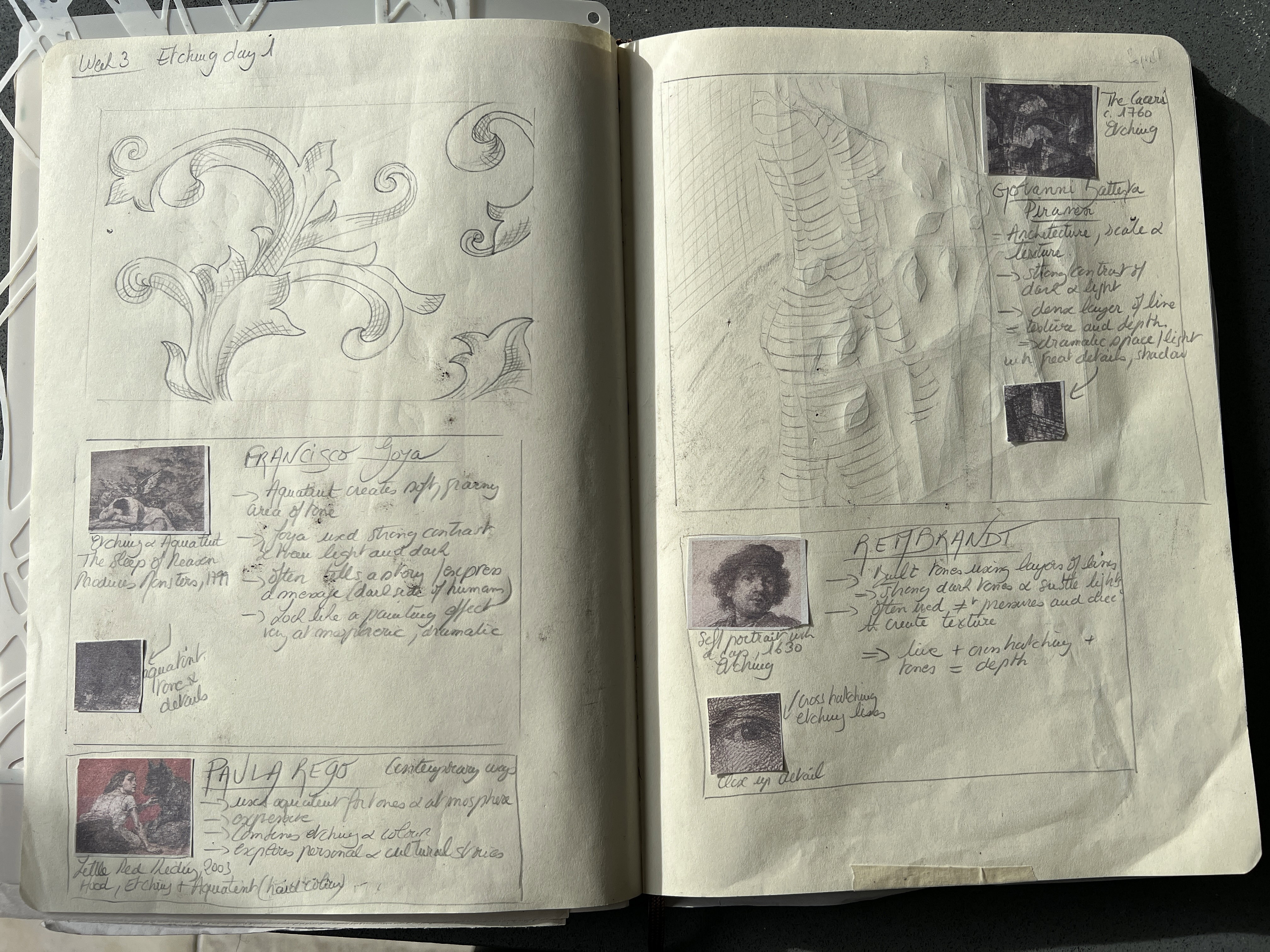
Before starting the practical work, I looked at how different artists used etching and related printmaking techniques. I researched Francisco Goya, Paula Rego, Giovanni Battista Piranesi and Rembrandt, looking particularly at how they used line, tone, contrast, texture and different mark making techniques to create atmosphere and depth.
Looking at these different approaches gave me ideas about what might be possible with the techniques before I started experimenting with them myself at the studio.
EXPERIMENTATION & DEVELOPMENT
This was very much a process of learning by doing. I experimented with the different techniques and quickly discovered that every stage mattered. Missing one step could completely change the result, as I discovered when I forgot to put one of my plates in the acid!
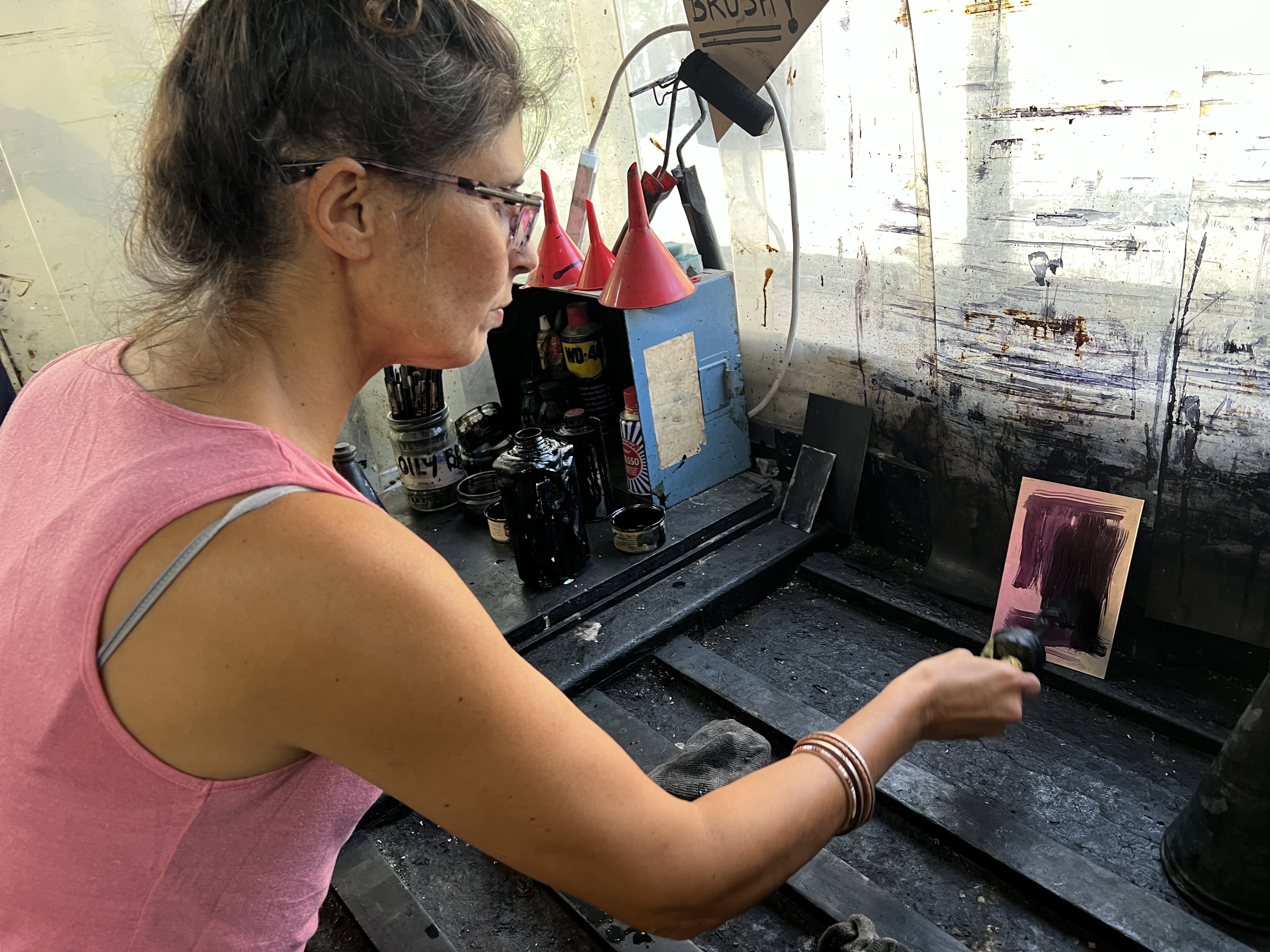
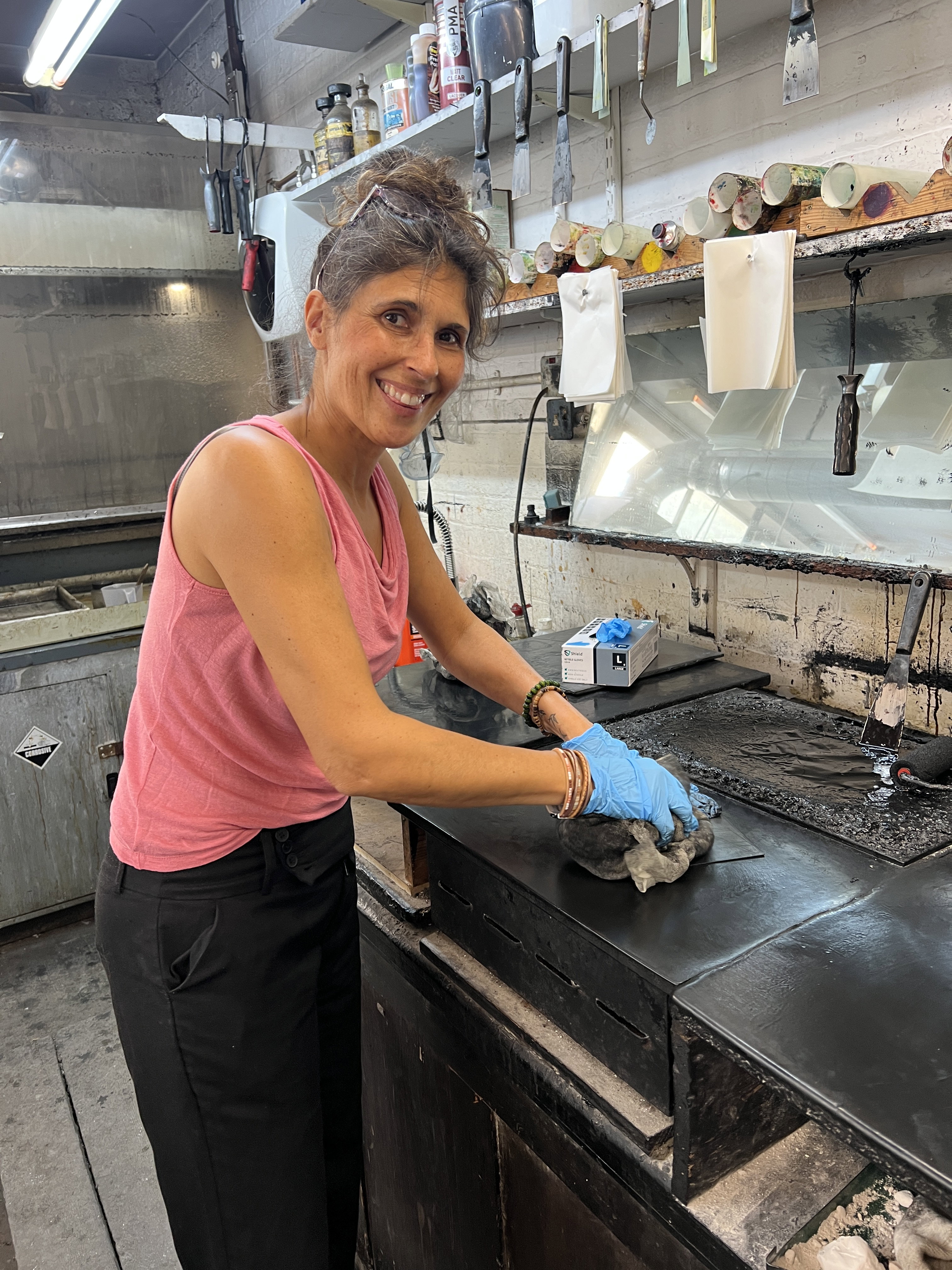
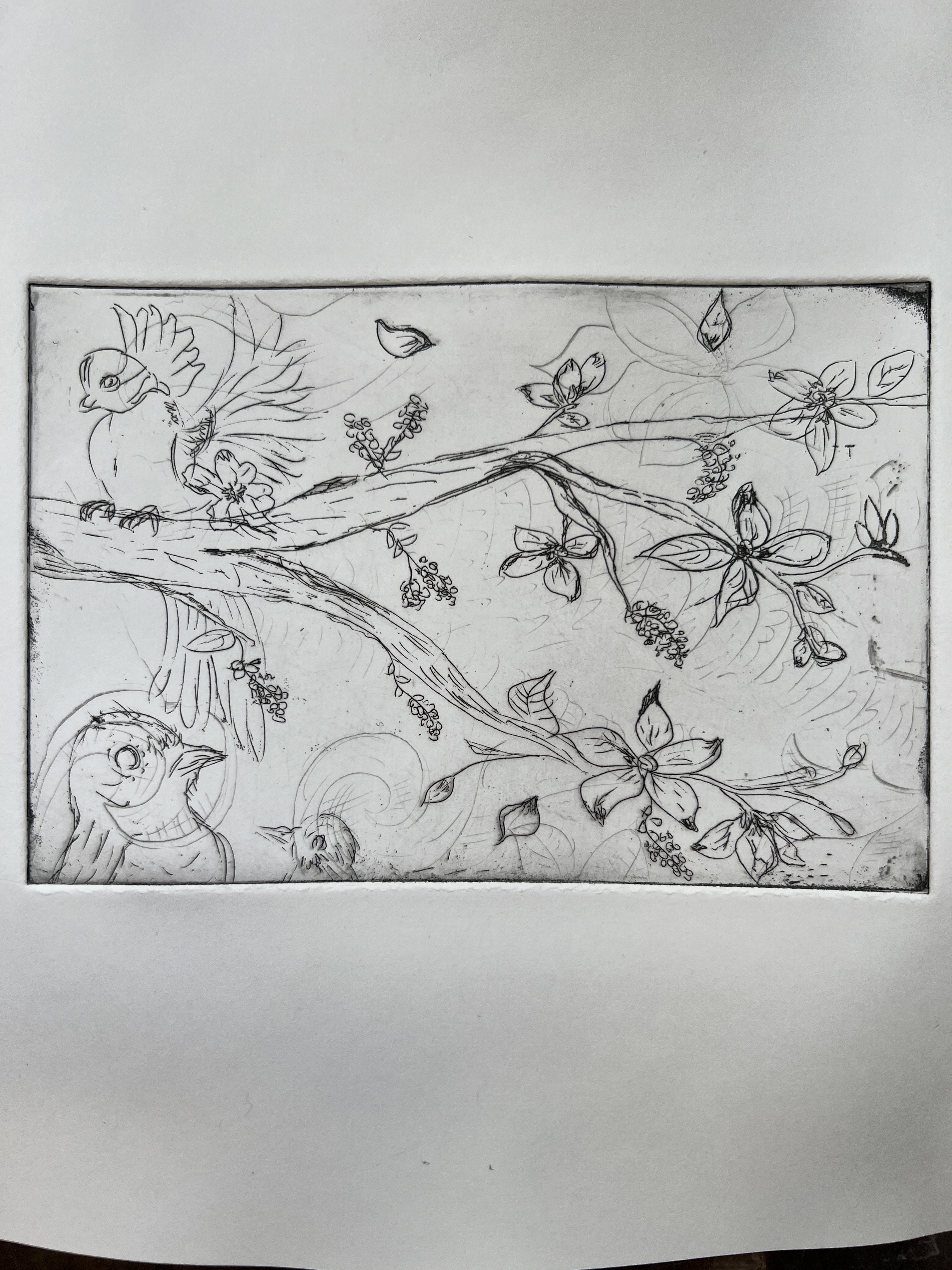
I kept experimenting, including with the less successful plates, and came back into the studio on Friday to have another go. By the last two designs, I could already see a difference in both the results and my confidence with the process.
OUTCOME
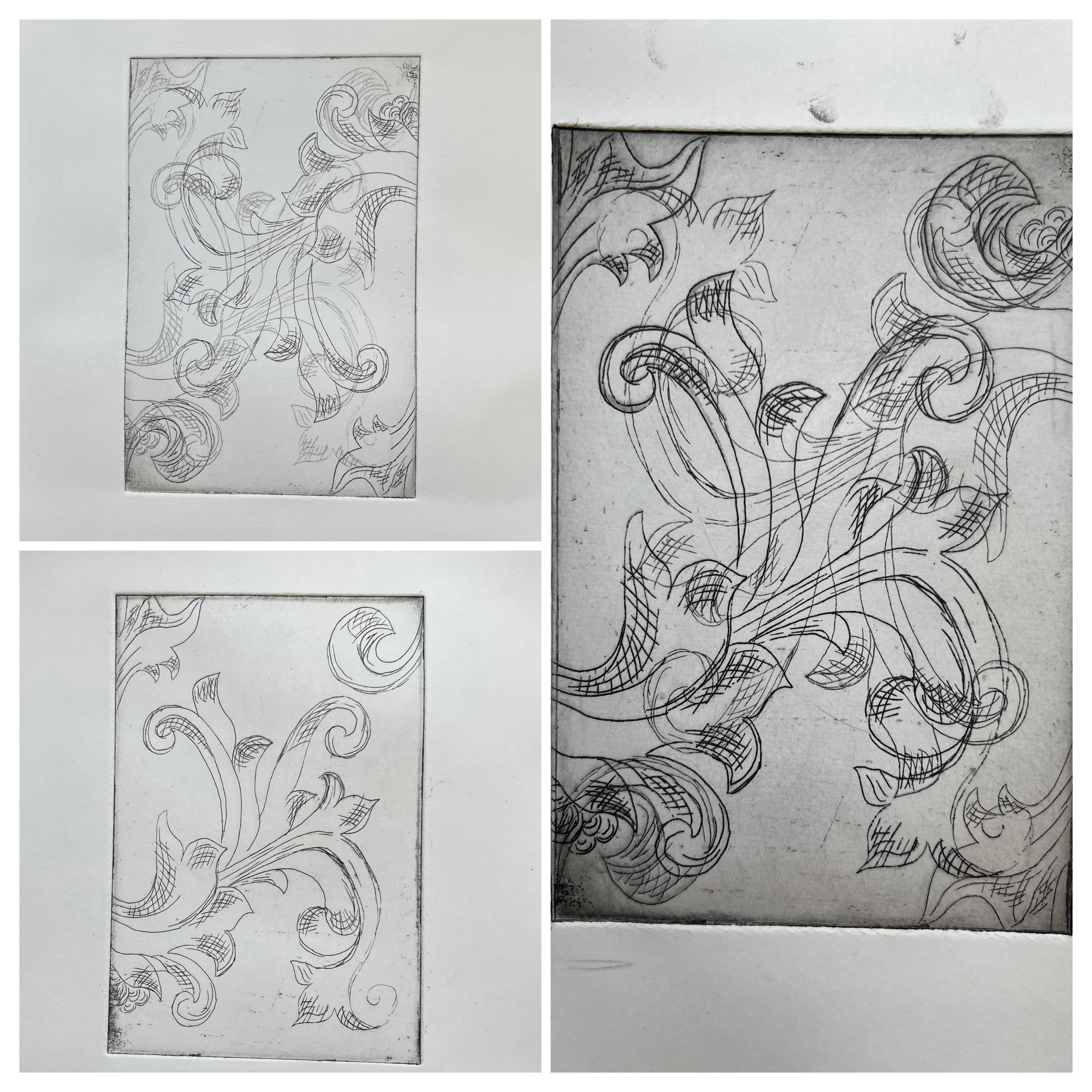
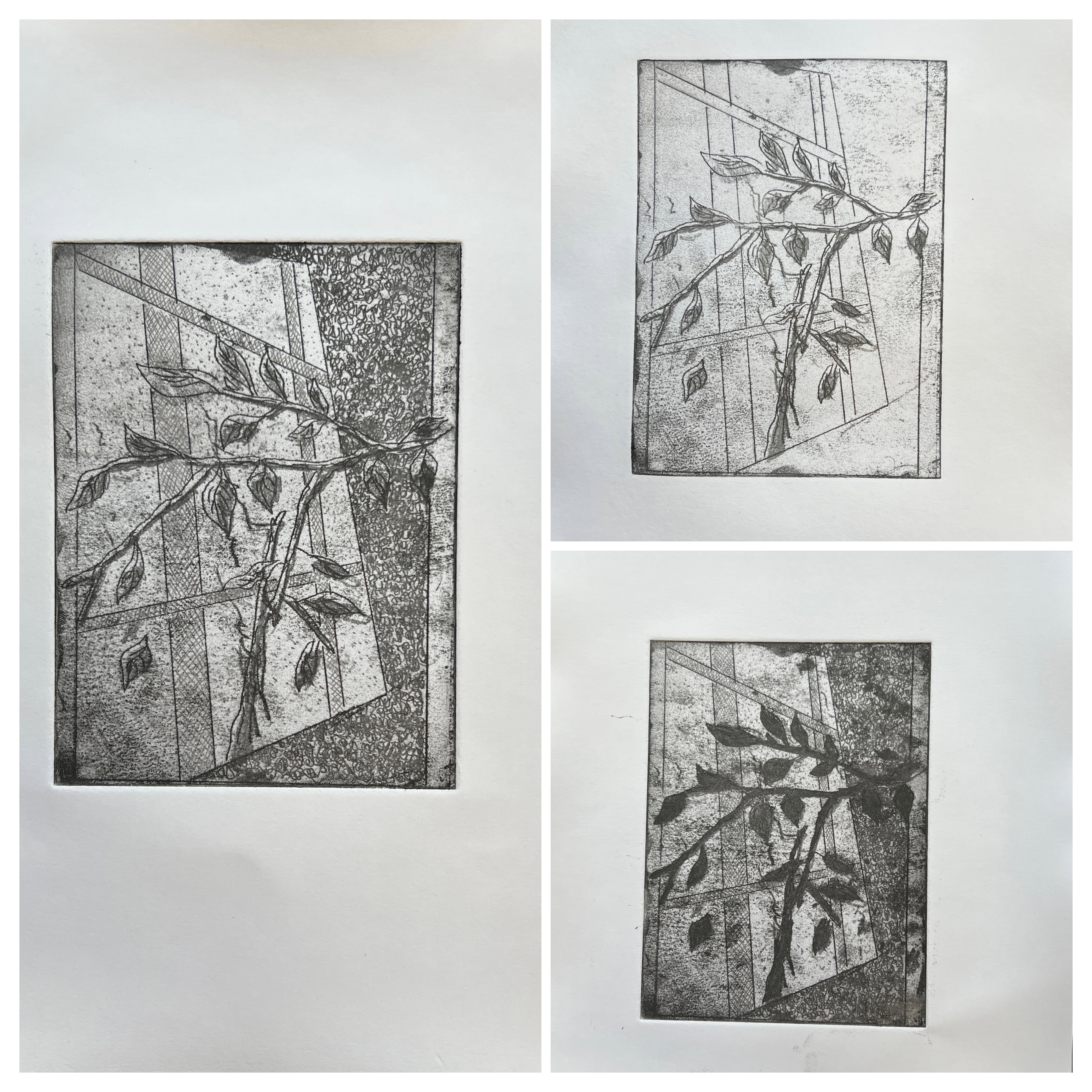
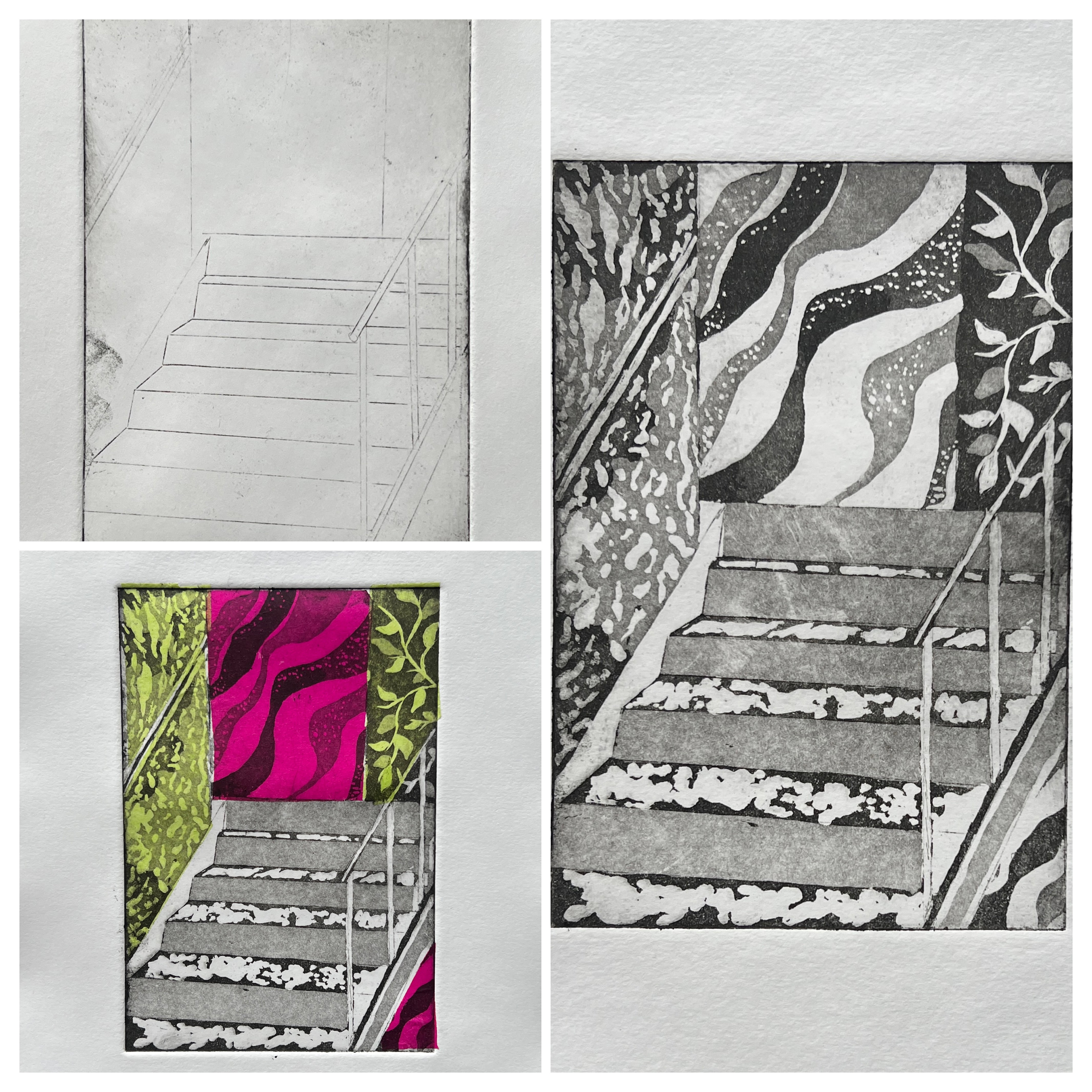
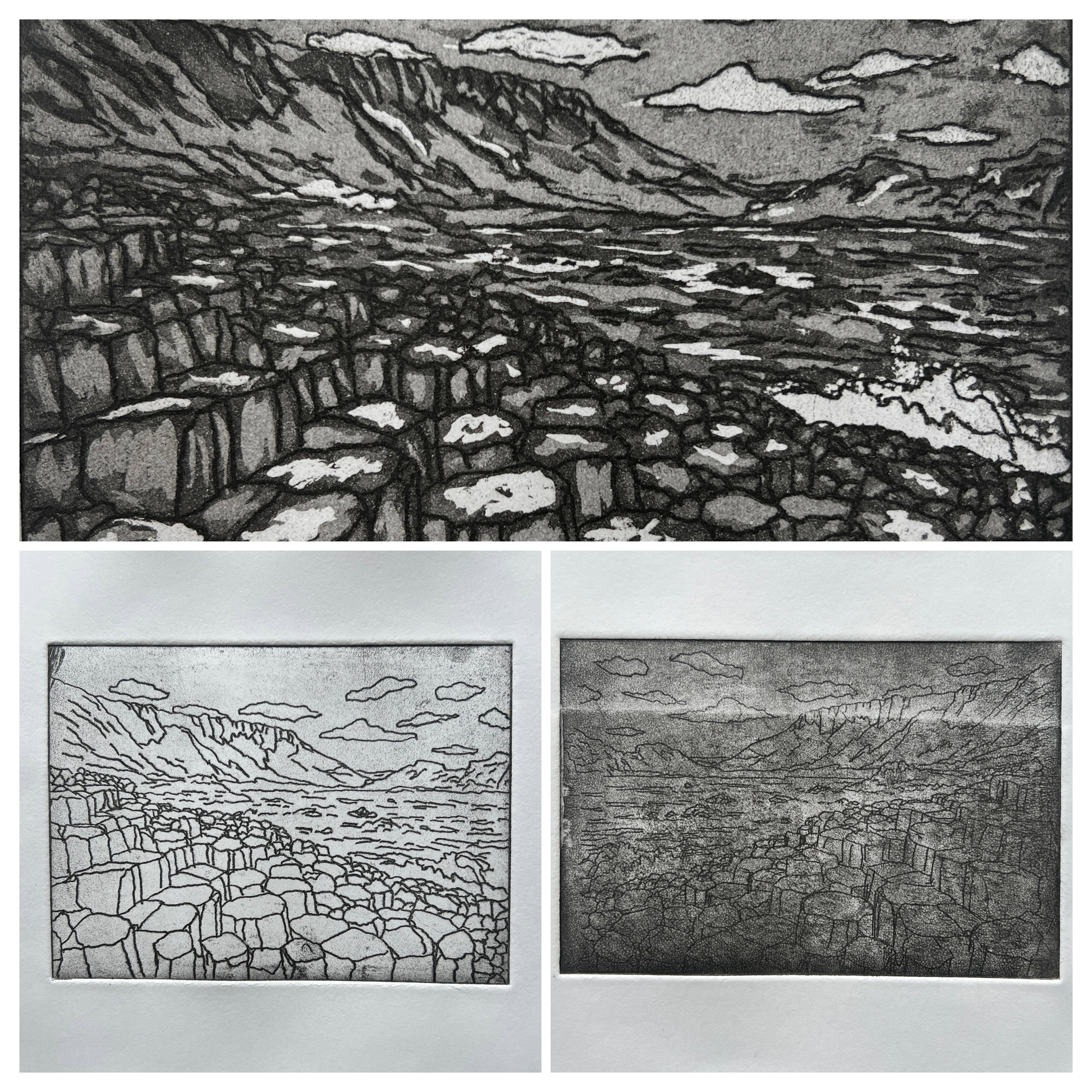
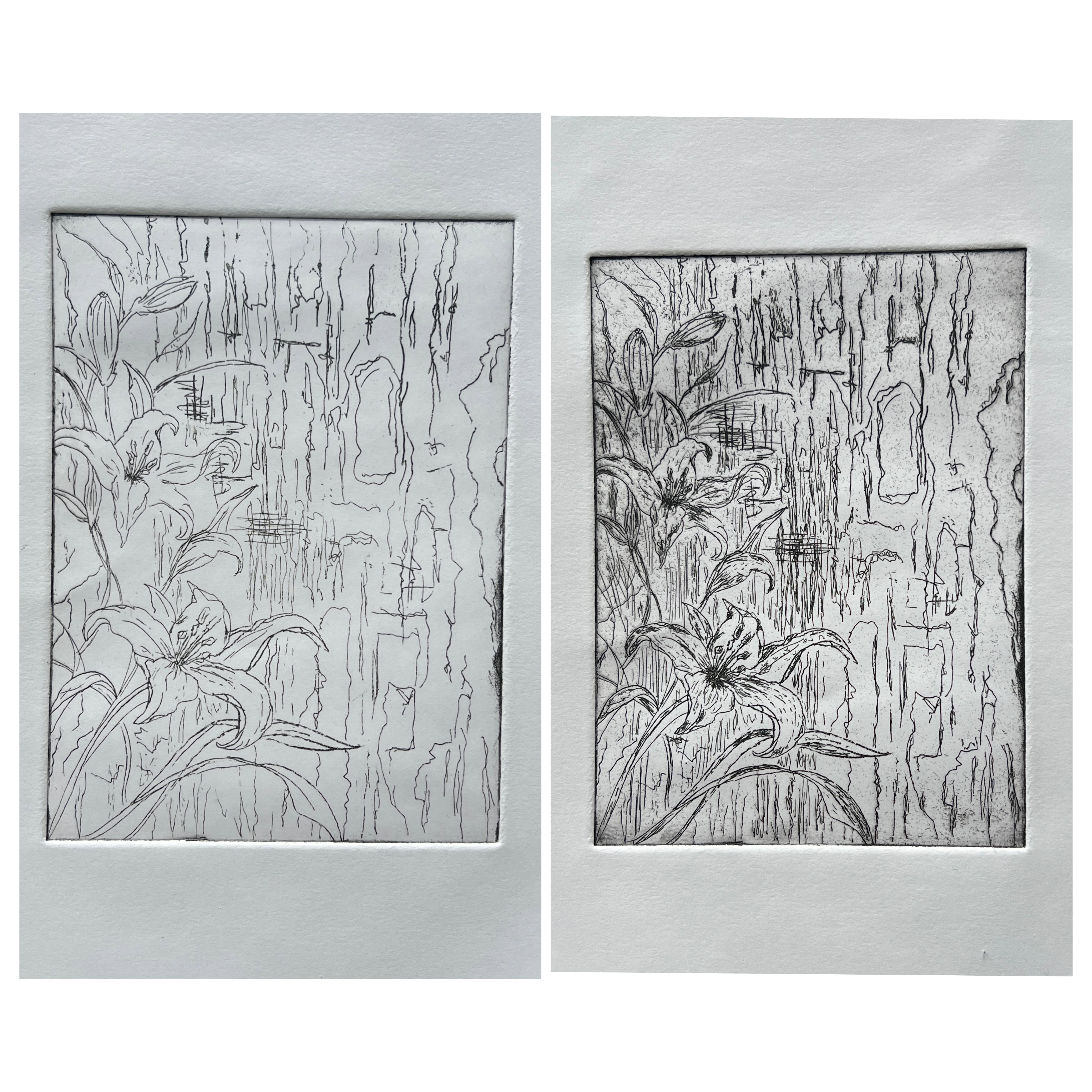
Rather than one final piece, I produced a series of prints using different techniques. My last two designs were the most successful for me and showed how much I had learned through repeating the process and experimenting.
REFLECTION
What did I enjoy?
The whole week! Although there was a lot to remember – and I am not sure my Dory the fish brain coped particularly well with all the steps, so thank you for all the practitioners on site! – I loved going through the processes and seeing how the image developed through each stage. I enjoyed it so much that I came back to the studio on the Friday to try the different techniques again. That probably says it all.
What did I find challenging?
Remembering all the different stages was probably the biggest challenge. There are quite a few steps and it is very easy to miss one, or even two, in my case, forgetting to put the plate in the acid! One of my plates also turned completely grey and I still do not really know why, so I had to start again. It was frustrating, but all part of learning the process.
What did I think I may have learned?
Printmaking is something I would definitely like to explore further. I also saw quite a difference between my first attempts and my last two designs, which were definitely more successful. The more I practised, the more confident I became with the process. Seeing what the other groups had done made me even more determined to get better at it.
Are there materials / techniques / processes / approaches from the project that you would like to investigate further?
Definitely. I am still unsure which process I like the most – soft ground, hard ground, aquatint or sugar lift – so I just need to experiment more before deciding. Adding colour with tissue paper was probably my least favourite technique, although I am glad I tried it.
What would I do differently if I had to do the project again?
Practise, practise, practise. It is quite a time consuming process and I think it will take a while before all the different stages become second nature. I cannot guarantee I will not forget another step, but hopefully I will remember the acid next time!
Did I document the work in progress and / or once complete?
I took pictures of the different prints and experiments as I worked through the techniques, including the less successful attempts and the later designs where I could see an improvement.
RESEARCH & REFERENCES
Goya, F. (1799) El sueño de la razon produce monstruos (The Sleep of Reason Produces Monsters). [Etching and aquatint]. Plate 43 of Los Caprichos. Available at: The Metropolitan Museum of Art Collection
Rego, P. (2003) Little Red Riding Hood on the Edge. [Etching and aquatint with hand coloring]. Suite of six narrative prints. Available at: Victoria Miro Gallery Exhibition Archive
Piranesi, G.B. (c. 1761) The Well: Plate XIII from the 'Carceri d'invenzione' (Imaginary Prisons). [Etching with reworked deep tonal contrasts, second edition]. Available at: British Museum Collection
Rembrandt van Rijn (1630) Self-Portrait with Cap, Open-Mouthed. [Etching showing line and cross-hatching detail]. Available at: Rijksmuseum Collection Amsterdam


