Medieval Reimagined
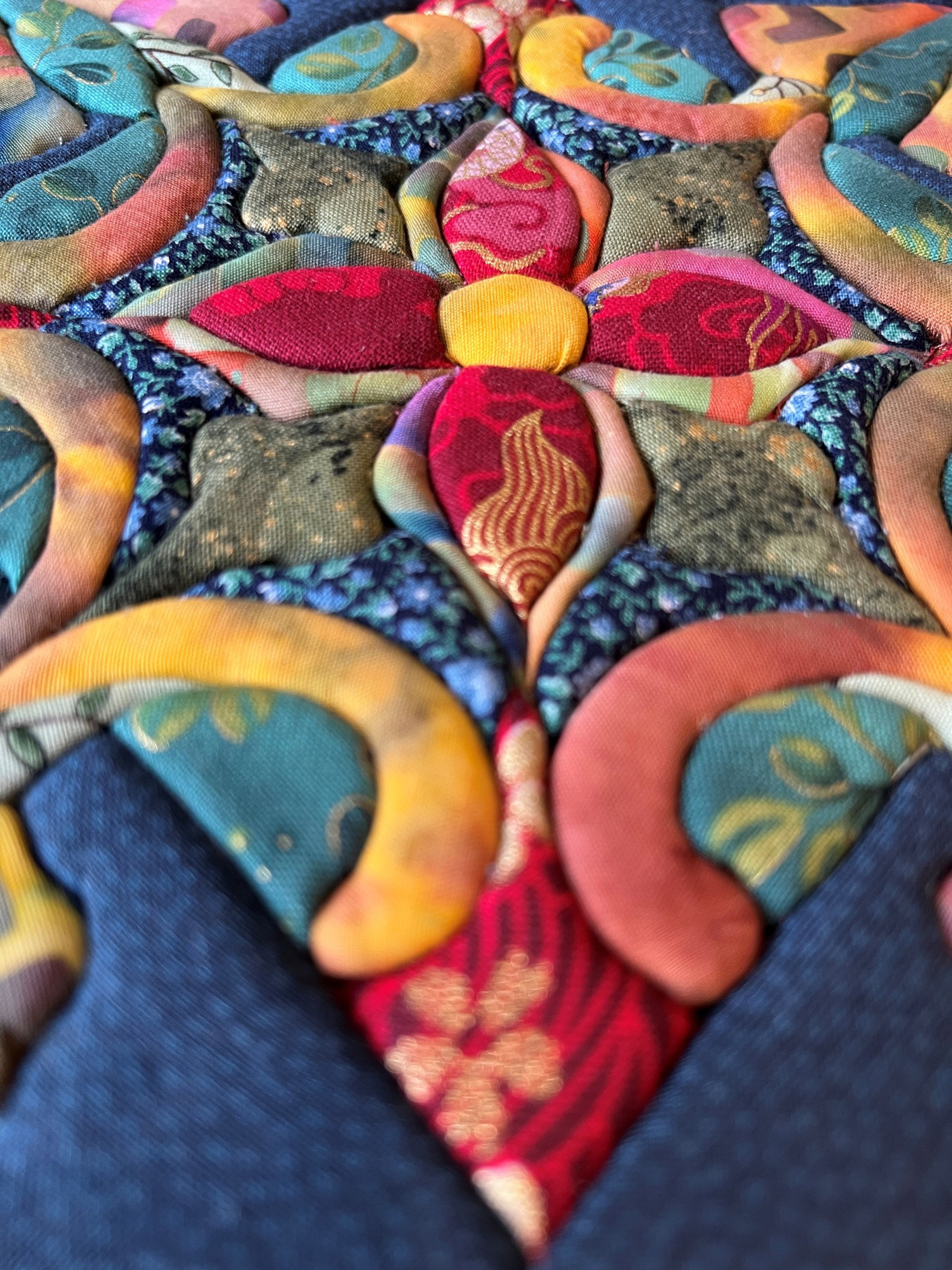
For this project, I visited the British Museum and chose an object from Medieval Europe to research and develop further.
RESEARCH & PLANNING
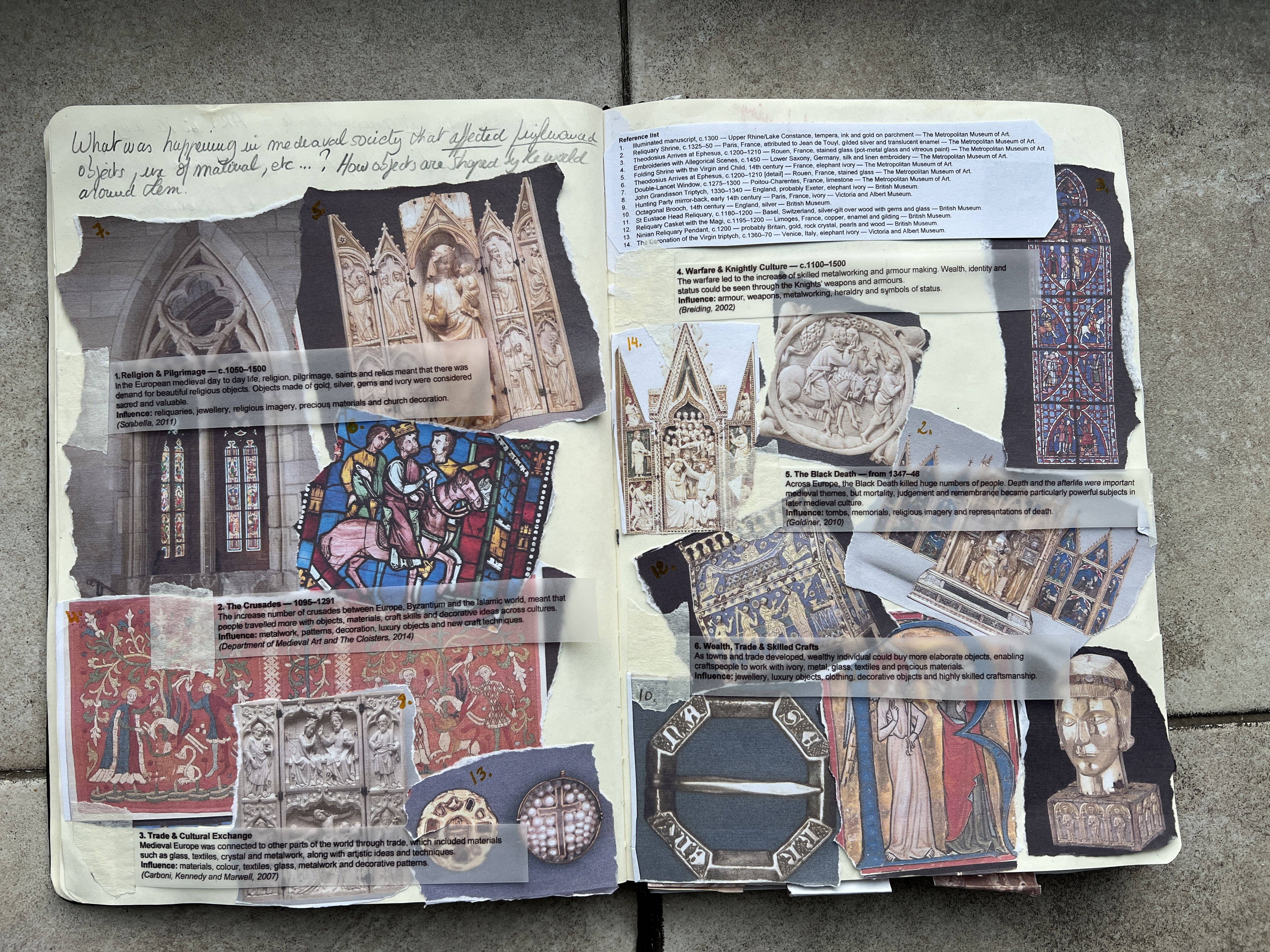
Before looking into the objects at the British Museum, I looked into the medieval society and how the world people lived in influenced the objects they made. Religion, pilgrimage, trade, cultural exchange, warfare, the Black Death and wealth all had an impact on the materials, imagery, decoration and craftsmanship of the period. Objects have been shaped by the culture, materials, events and influences around the people who make them.
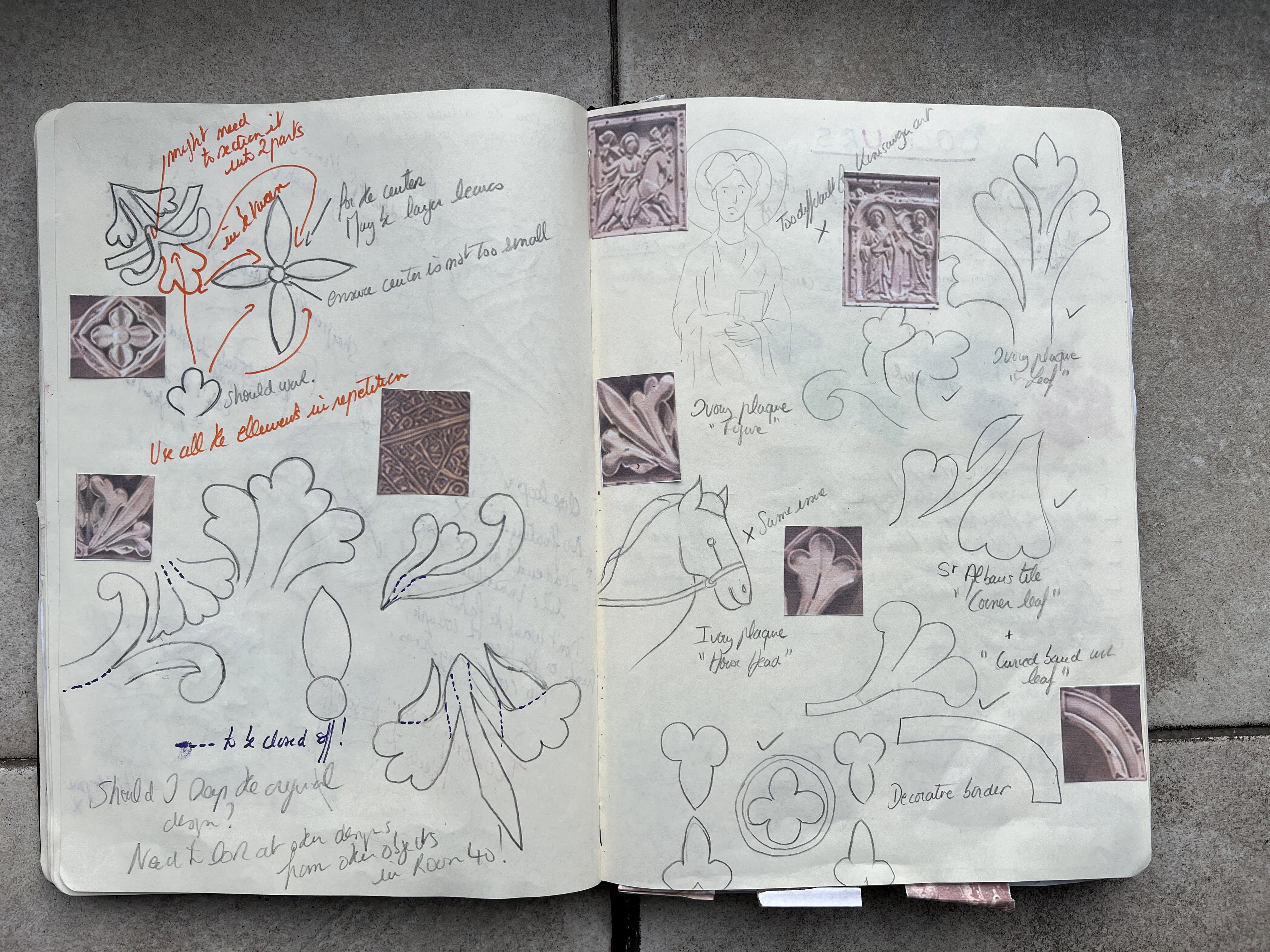
Mingling through the various displays, I was inspired by the Lewis Chessmen pieces from c.1150–1200 and the St Albans relief tile dating from c.1151–66, in particular their patterns and surfaces. In my own practice, I have always loved playing with mixed media and texture.
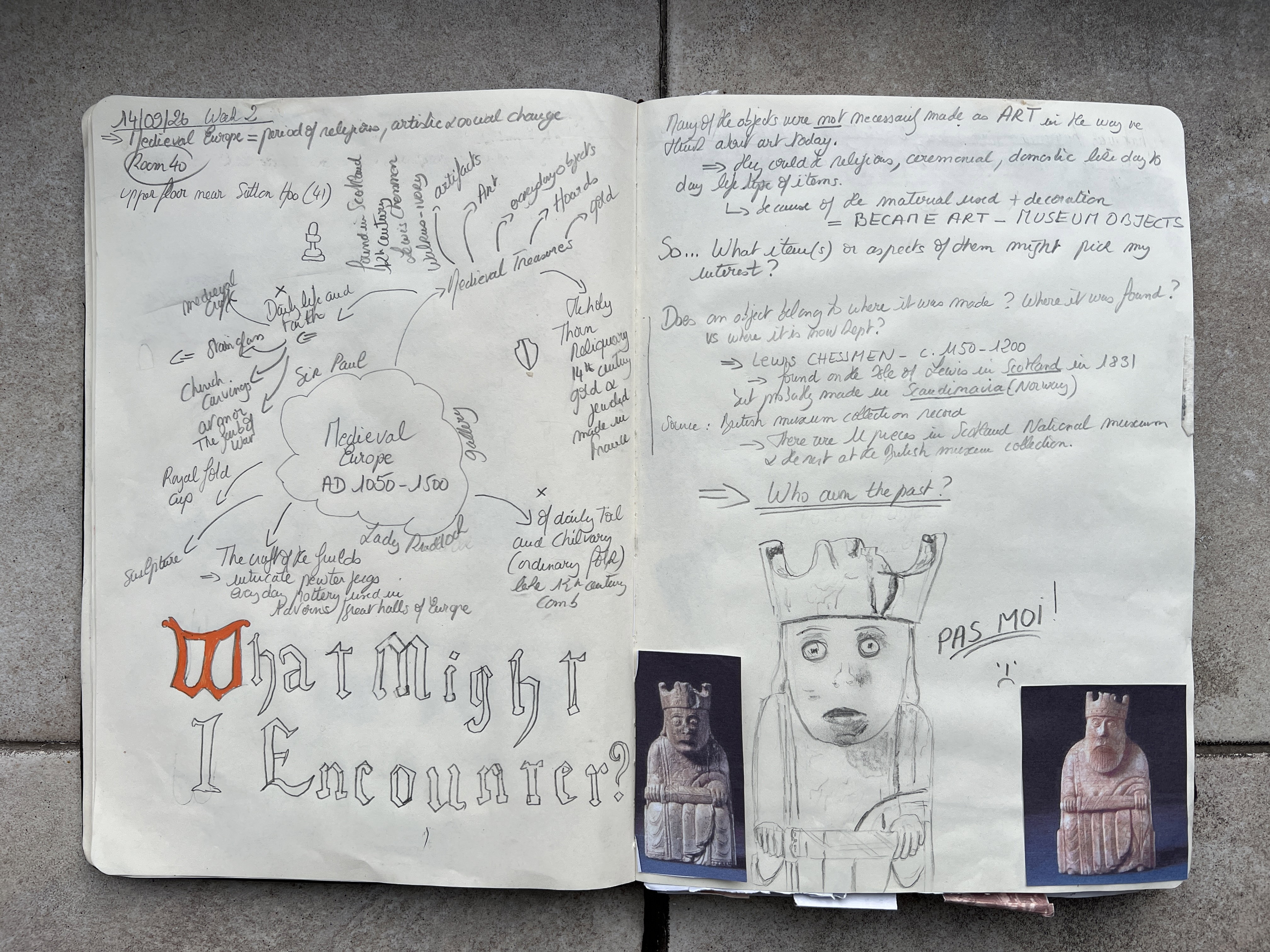
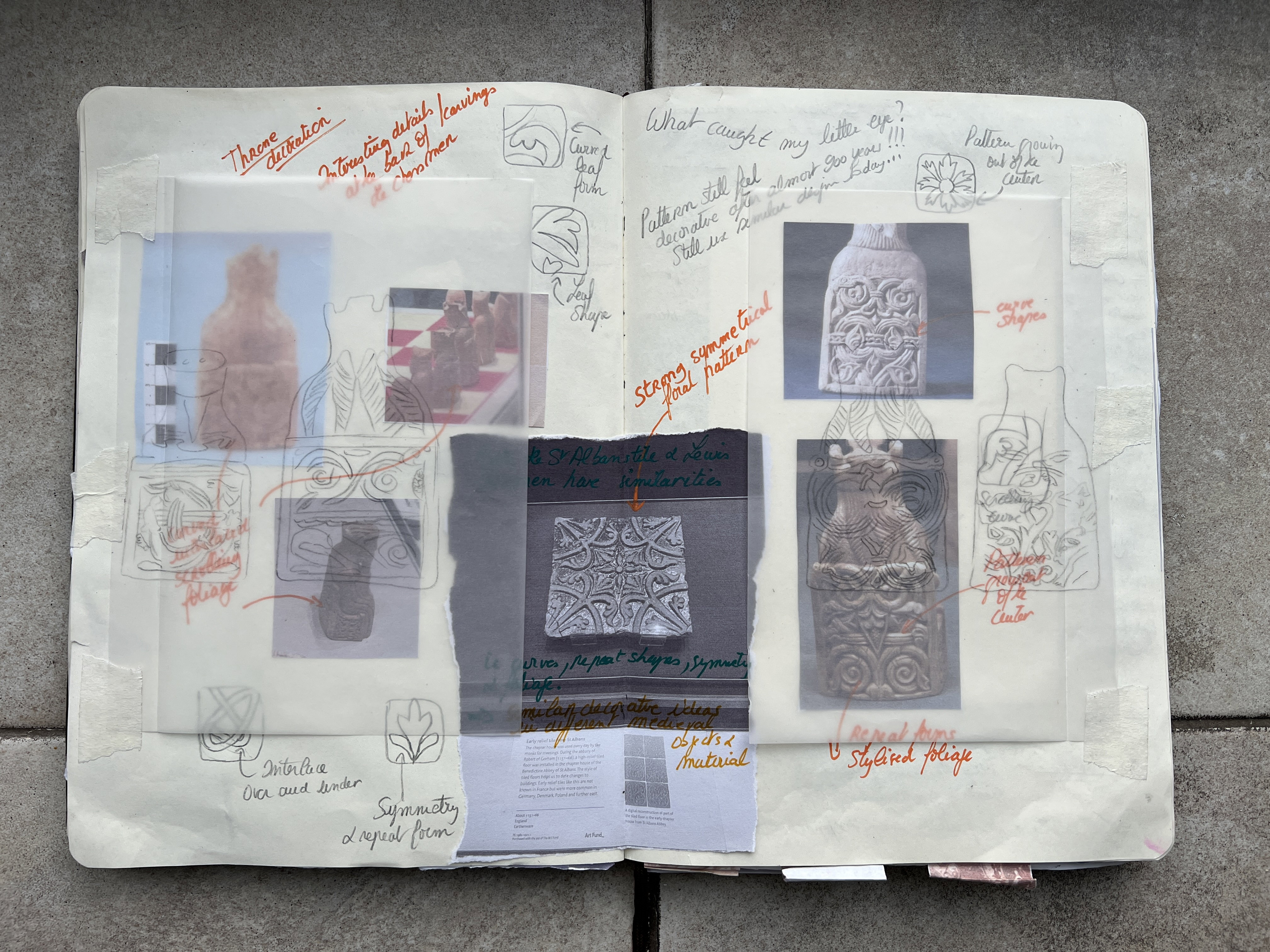
Rather than simply recreating the objects, I decided to see what might happen if I kept something recognisable from the original but completely changed the material and feel of it. The aim was to see how far I could take the original object through drawing and experimentation.
Material translation through opposition
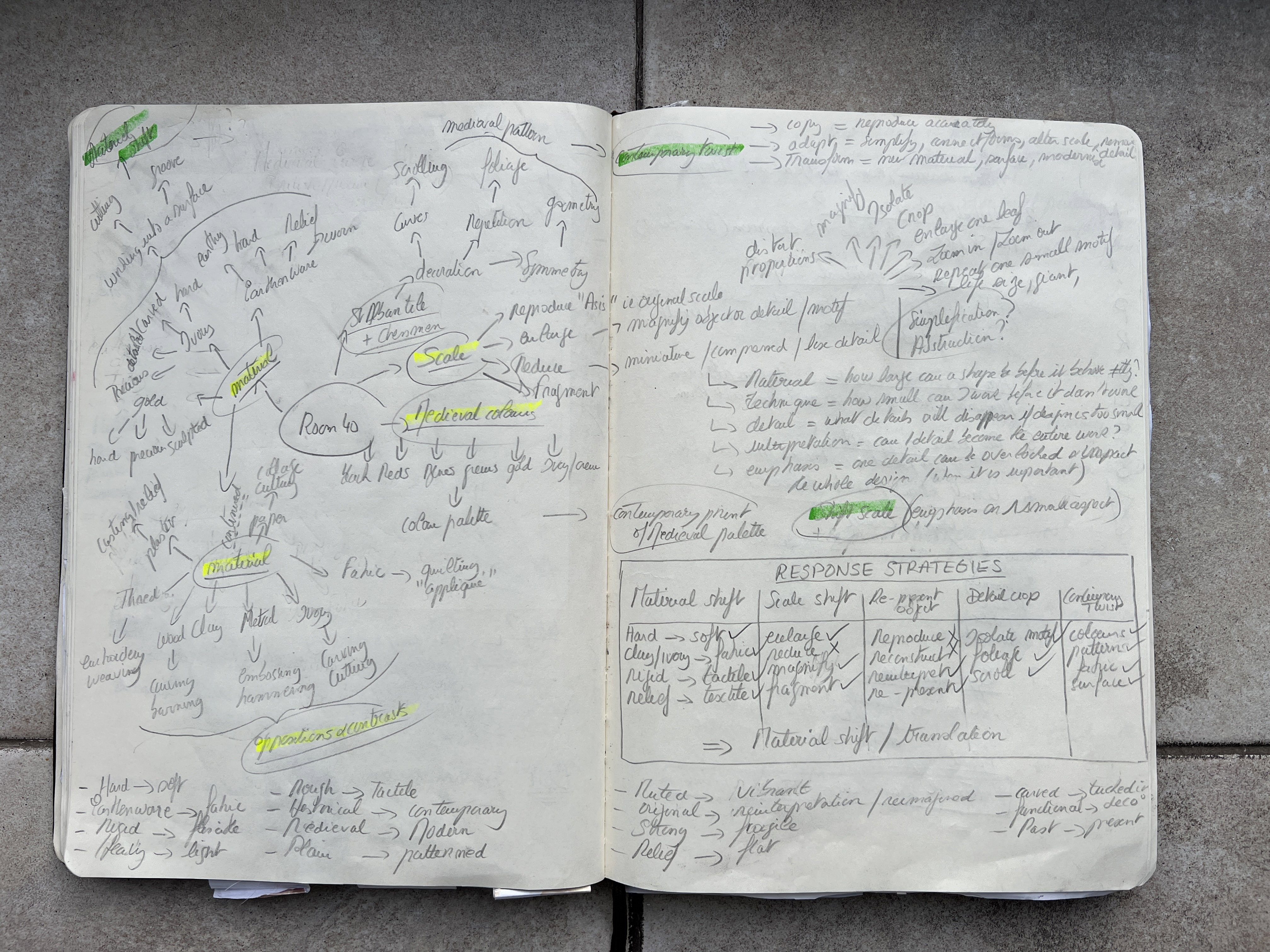
My research eventually led me to Kinusaiga, a Japanese textile technique using pieces of fabric tucked into grooves to create an image.
The connection came to me when I spotted the signs for the Japanese galleries while walking around the museum.
I liked the idea of bringing together two completely different cultures and periods through materials, recreating something hard and ancient through soft, contemporary fabric.
Kinusaiga was not a historical influence on the medieval objects, but a contemporary connection I made through my own research and previous experience of the technique.
EXPERIMENTATION & DEVELOPMENT
Pattern in action (10mns)
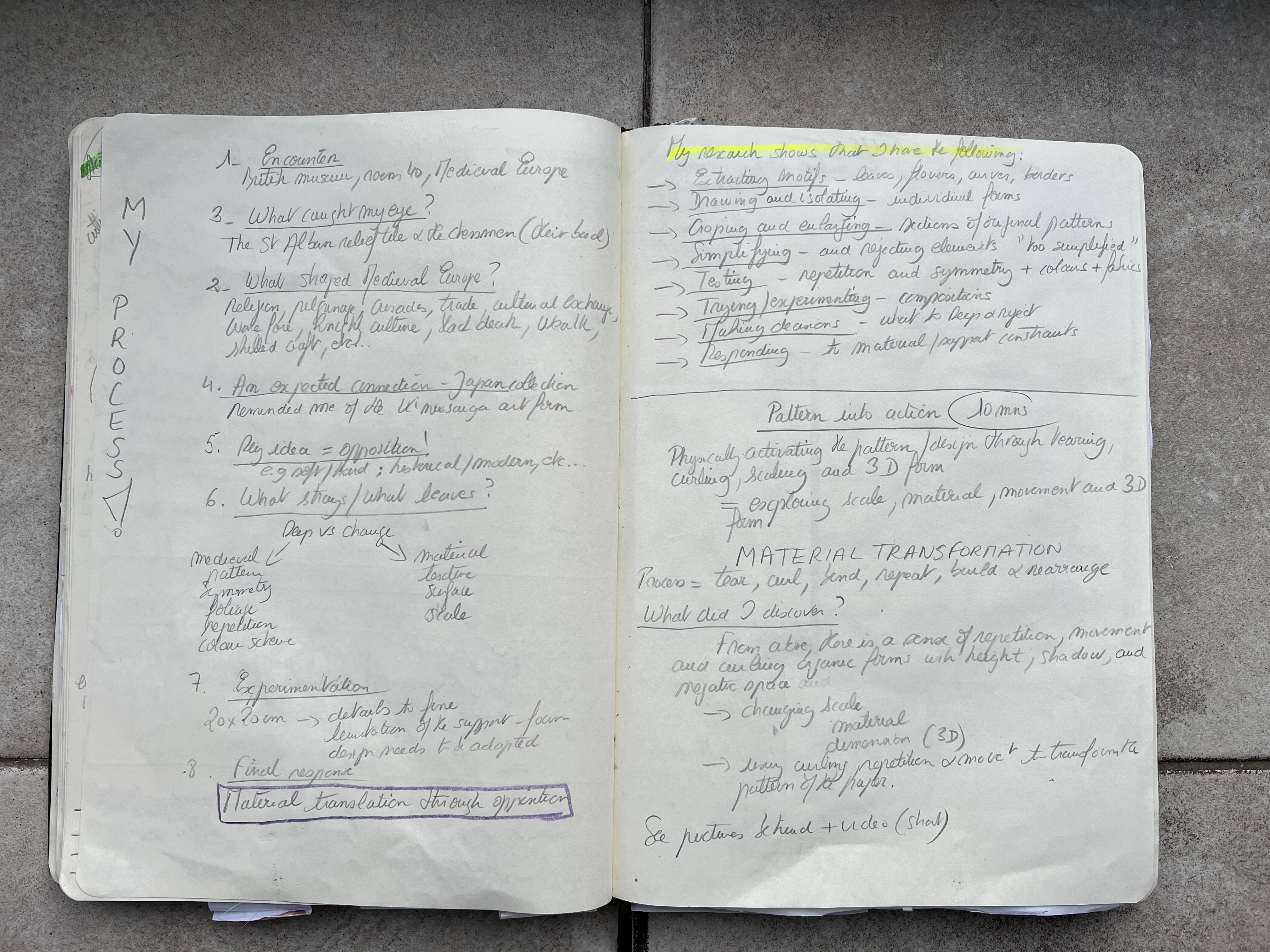
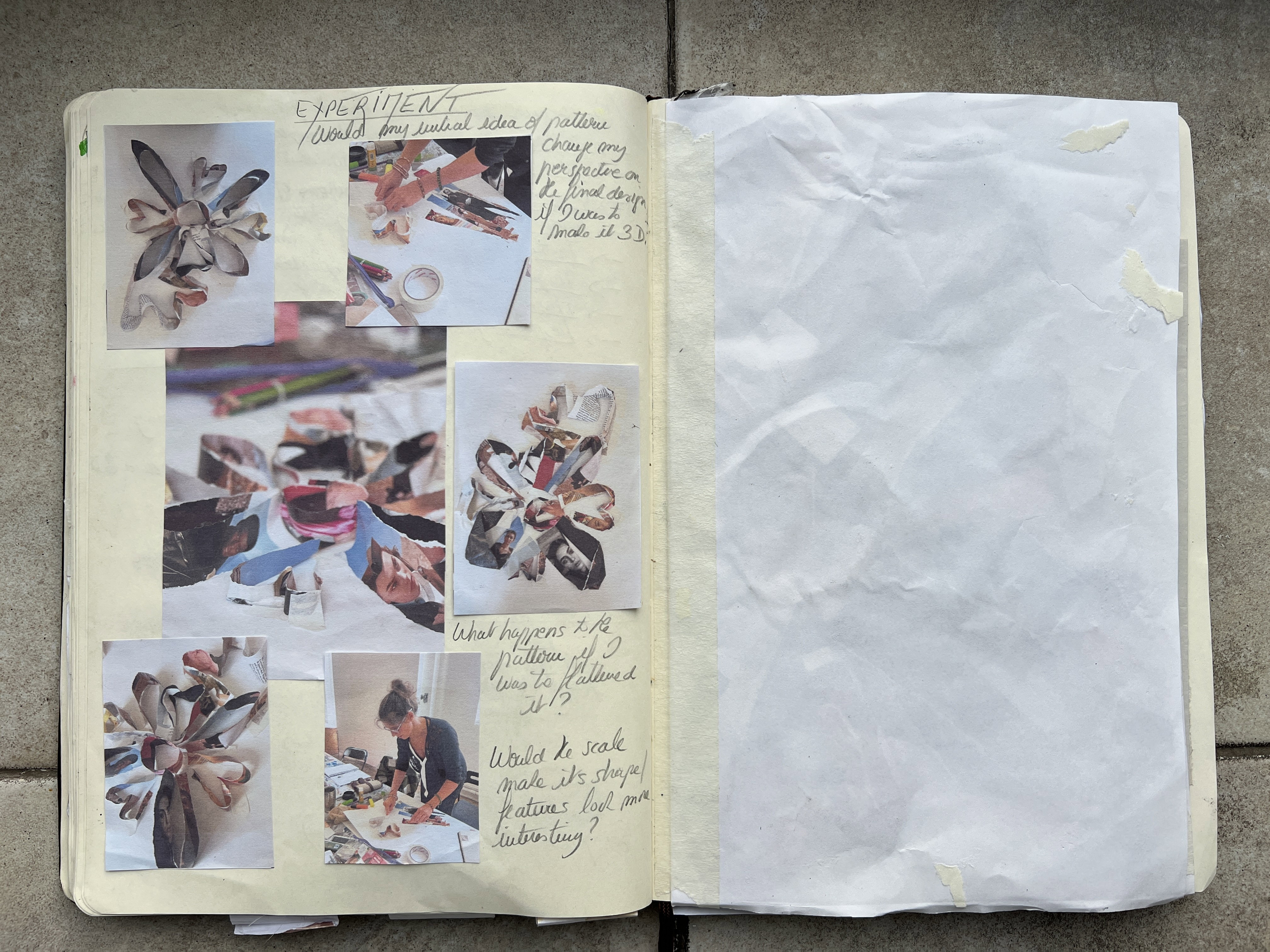
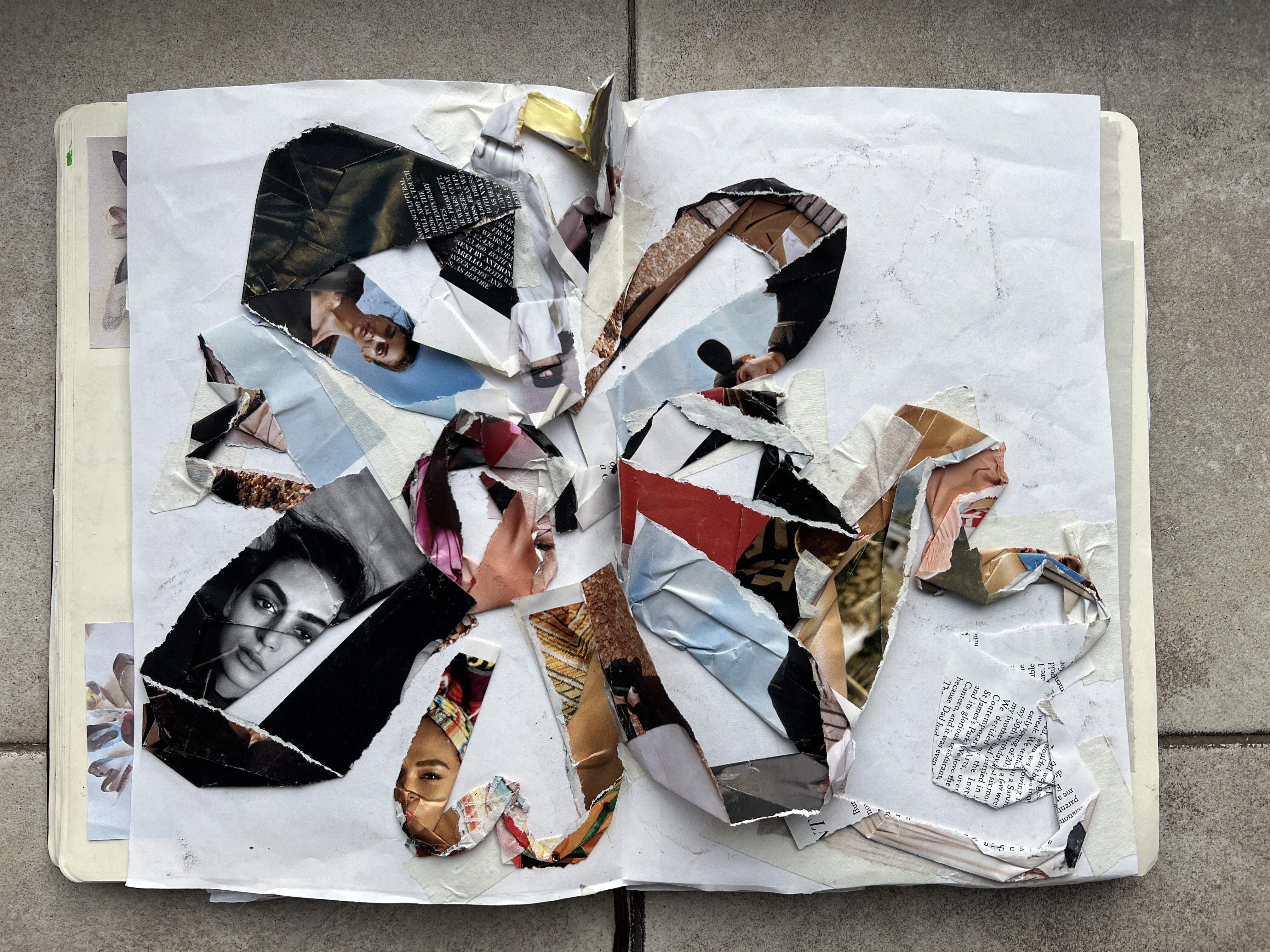
From tile to textile
I liked the idea of taking something hard and solid, like the medieval tile or the decorative patterns on the Lewis Chessmen, and recreating it using something completely different. The key idea was OPPOSITION.
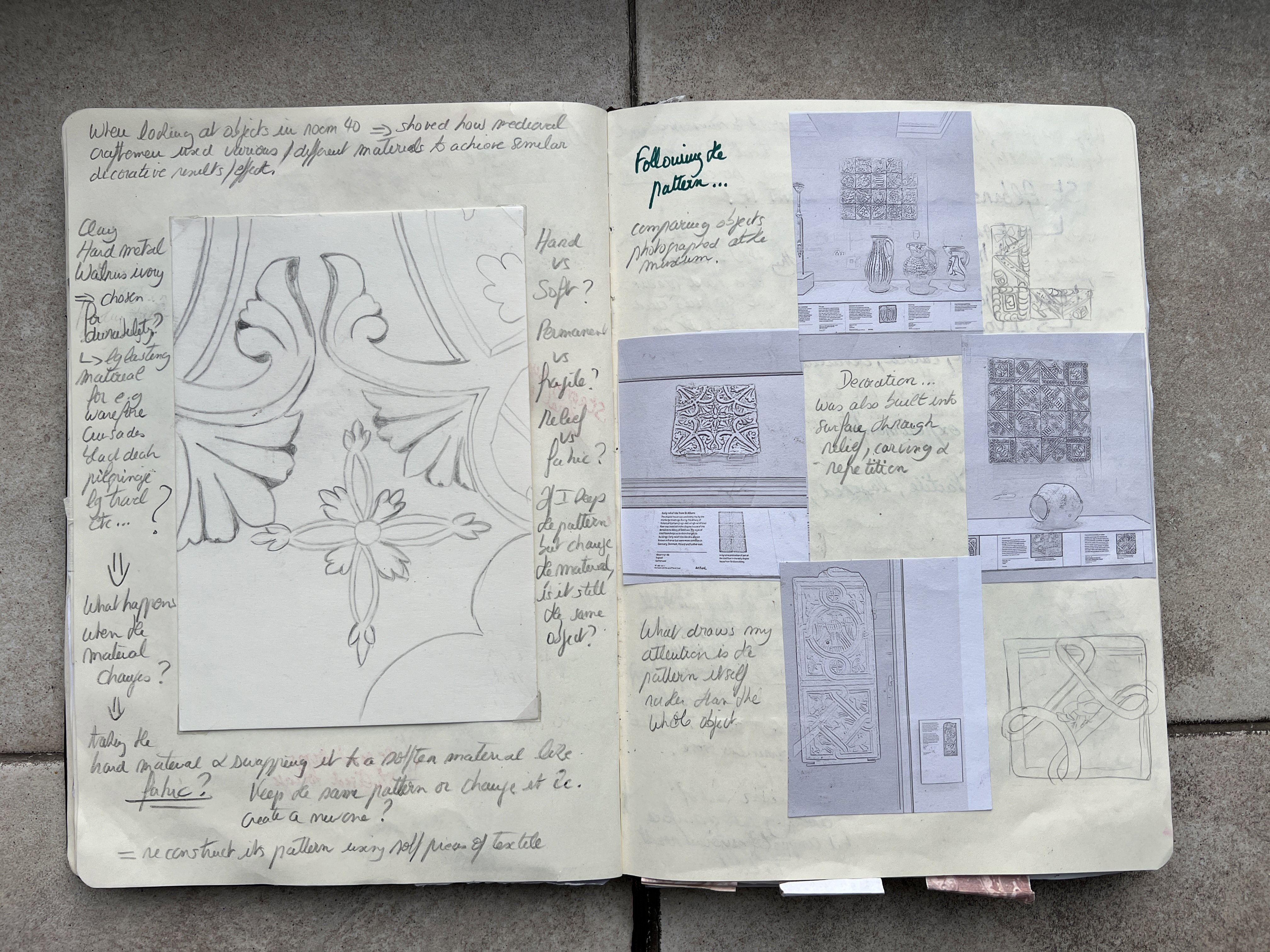
After seeing the Japanese section at the museum, I thought about Kinusaiga and wondered if I could use a similar approach with the patterns I had been looking at.
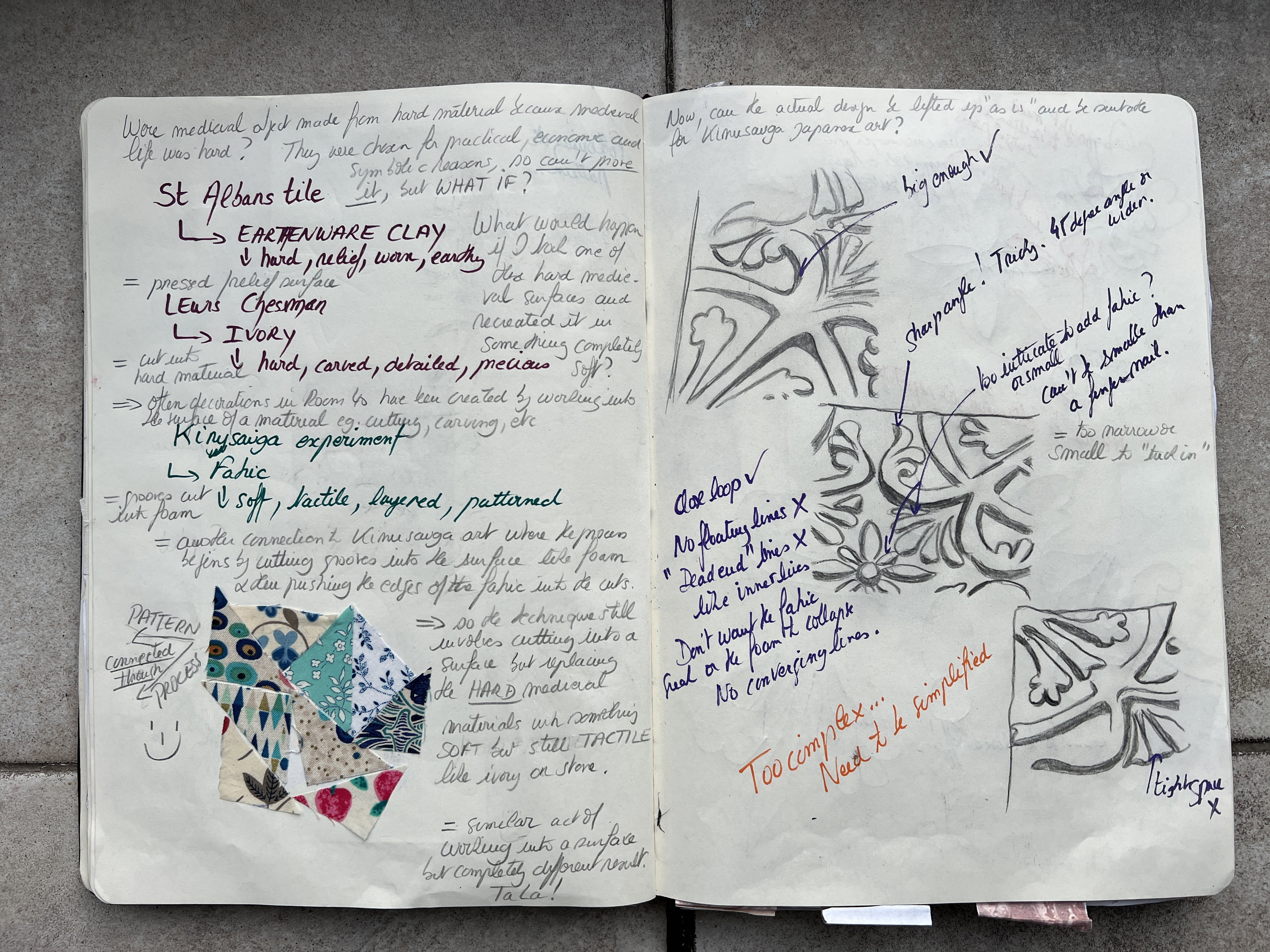
Using fabric created an interesting contrast: hard versus soft, rigid versus flexible, plain versus patterned, muted versus colourful.
It was a way of taking something very old and looking at it differently through another material and technique.
OUTCOME
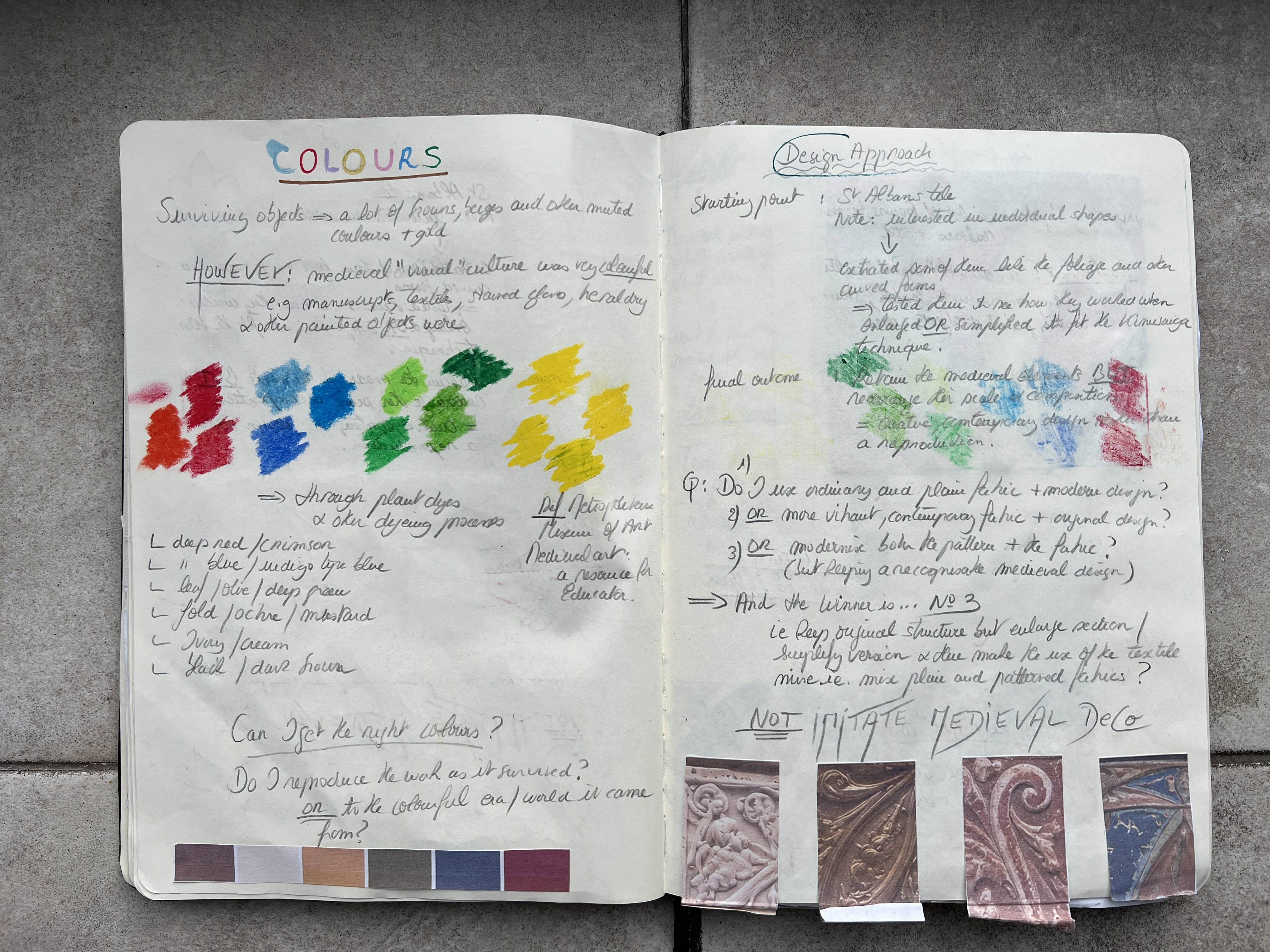
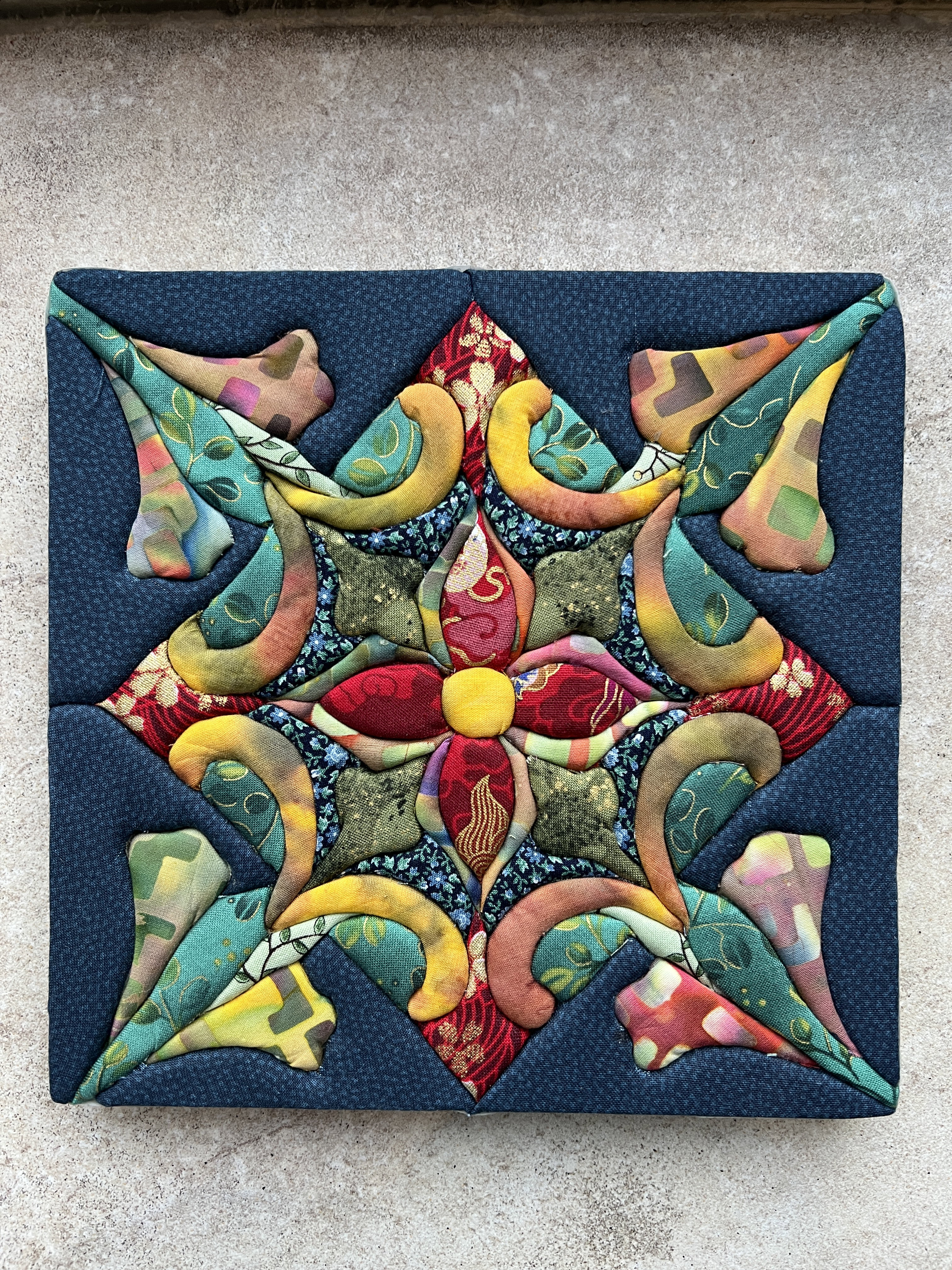
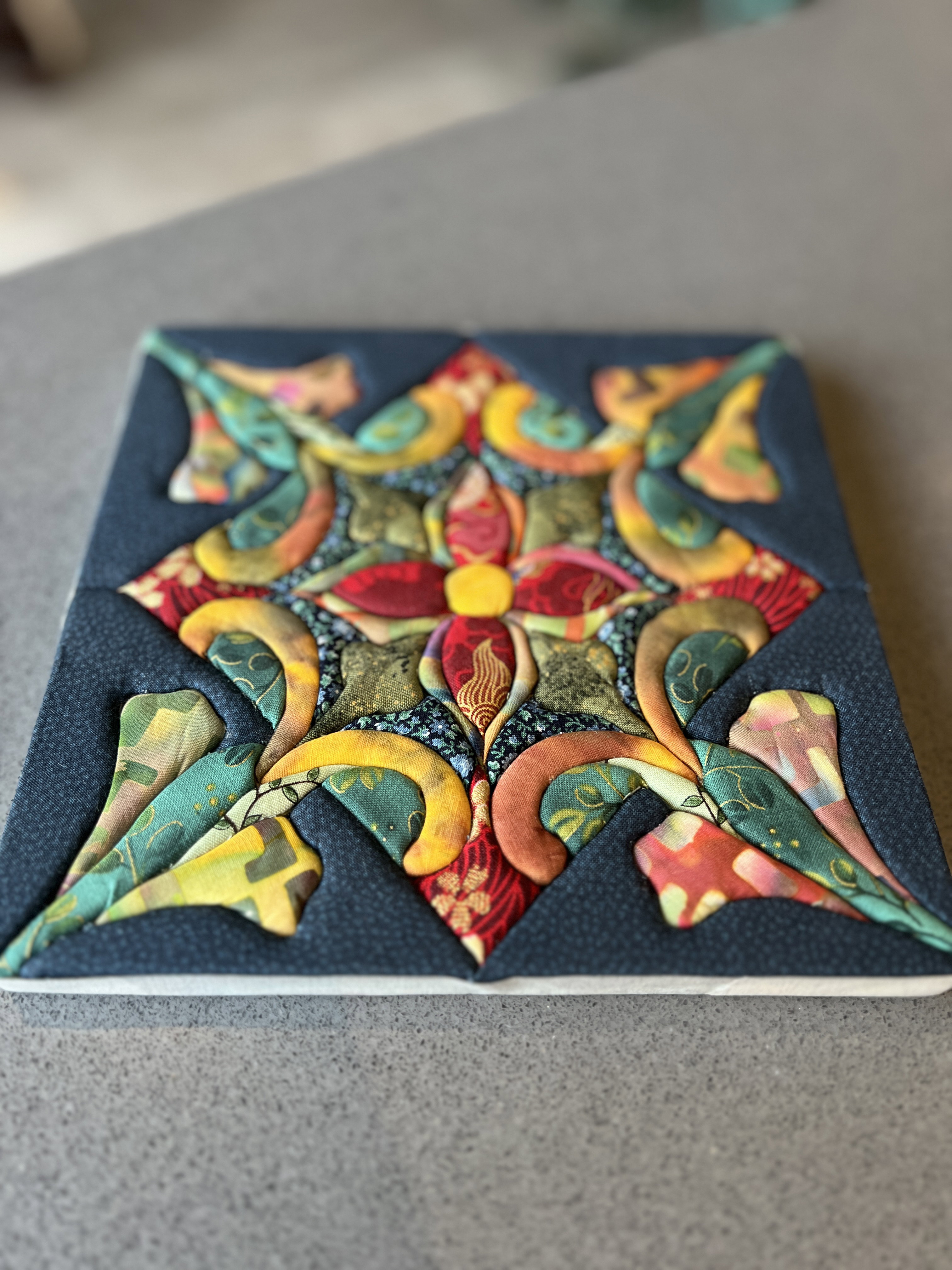
Although inspired by the medieval patterns found in the Lewis Chessmen pieces and the St Albans relief, the contemporary Kinusaiga piece retained some recognisable elements but transformed the surface through fabric and colour. The contrast between the original hard material and the softness of the textile became more important than completely changing the pattern itself.
REFLECTION
What did I enjoy?
I really enjoyed developing the idea and thinking about how I could take something medieval (and not particularly inspiring to me as an era) and make it feel more contemporary, more 'moi'.
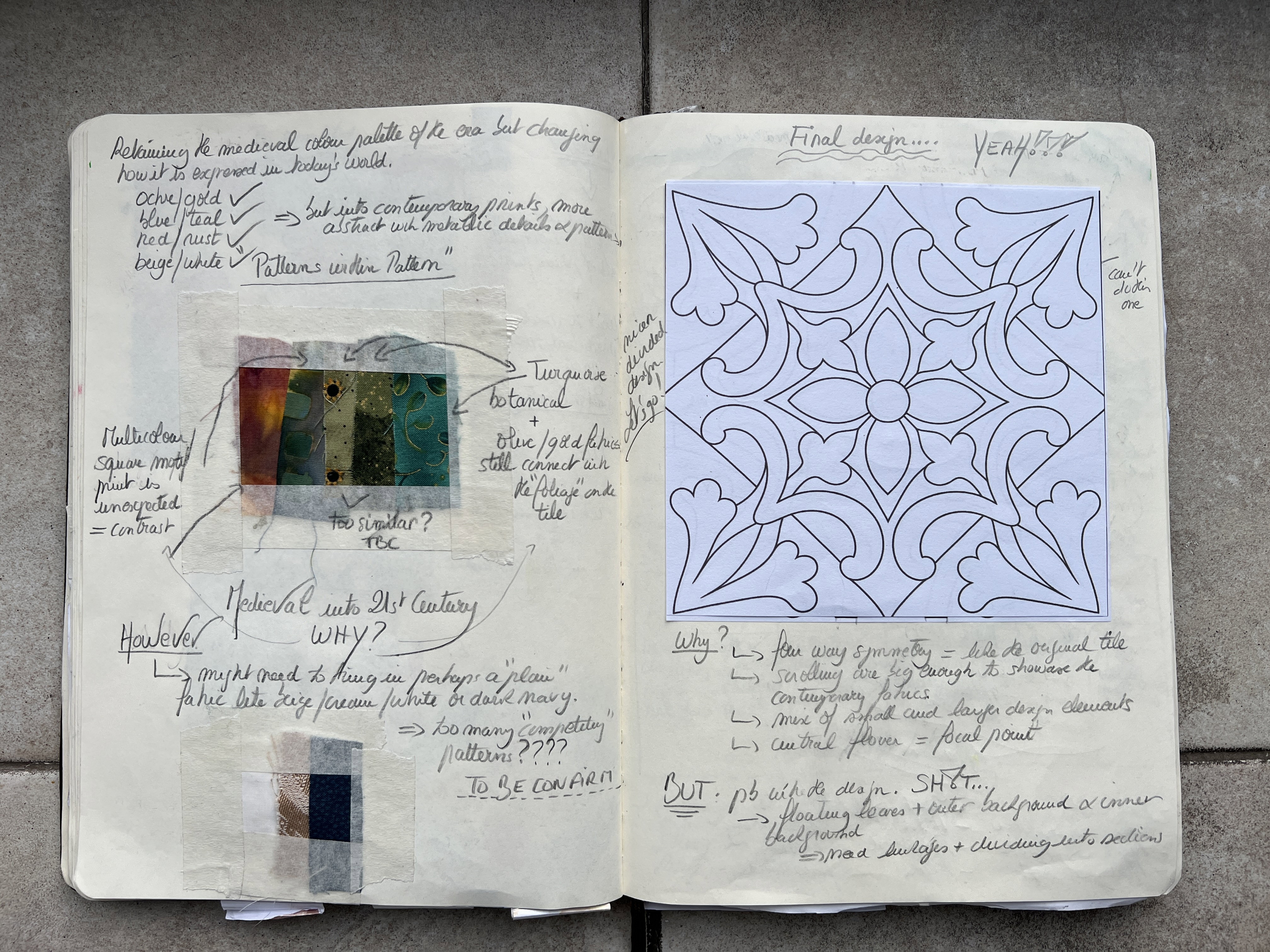
Choosing the fabrics was particularly fun, and I was lucky enough to already have fabrics that felt relevant to the medieval colours while still bringing something different and more current to the piece.
What did I find challenging?
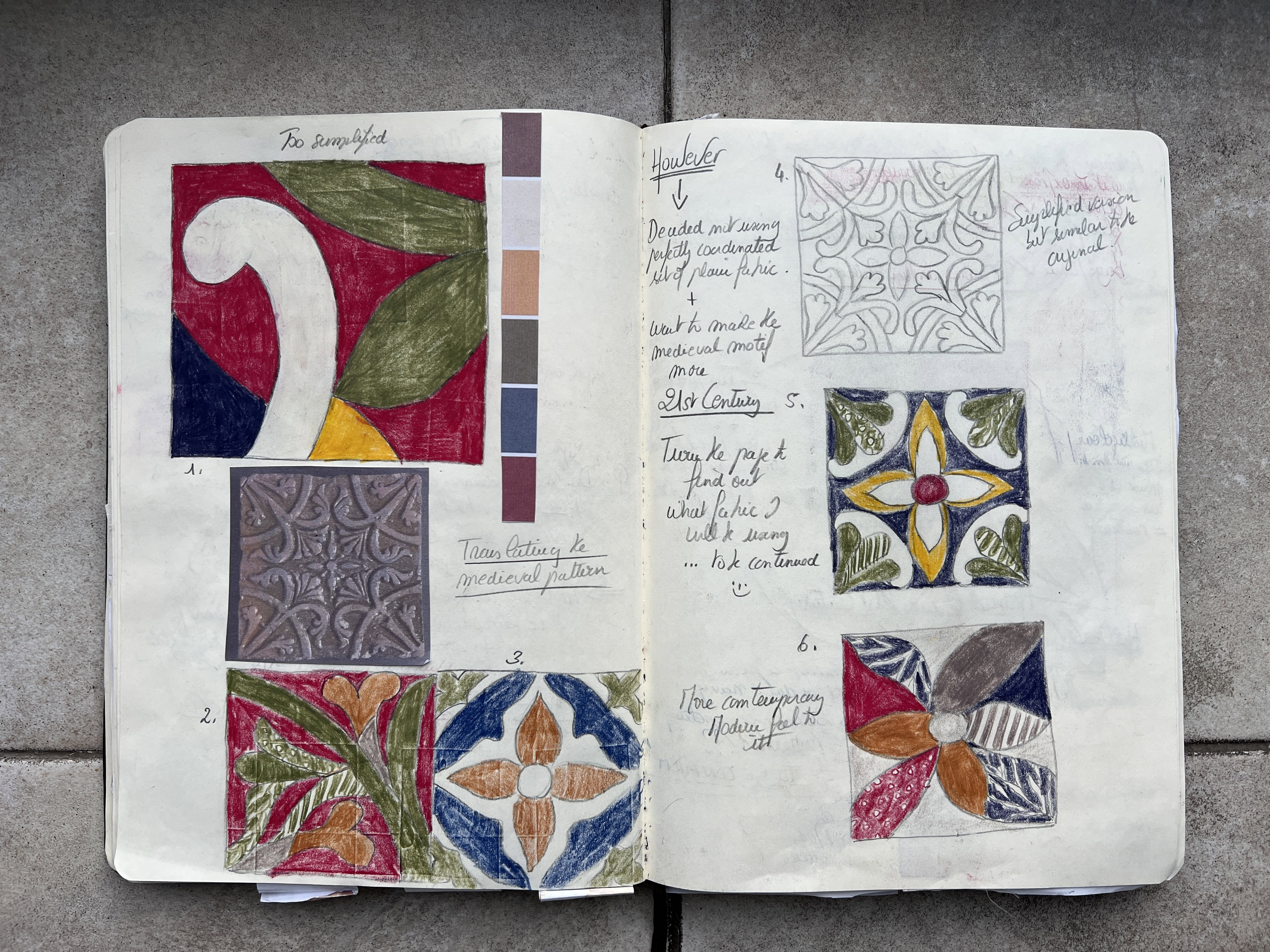
The main challenge was around the idea of opposition and contrast i.e. how far could I move away from the original inspiration? I considered taking one small section of a pattern and enlarging it, or changing it more dramatically, but in the end I felt there was more interest in keeping it recognisable and creating the contrast through the materials instead.
What did I think I may have learned?
I have enjoyed thinking outside the box and making connections that are not necessarily obvious at first. It was interesting to bring together Medieval Europe and a Japanese textile technique and seeing how the two could work together.
The process reinforced in my mind that developing an idea does not mean changing it beyond recognition. Sometimes keeping part of the original is what makes the change more interesting, and in this case, keeping the pattern recognisable actually made the contrast in materials stronger.
Are there materials / techniques / processes / approaches from the project that you would like to investigate further?
I had used this type of textile technique before, so in some ways it was a safe choice for me. However, using it in this completely different context made it feel new again. I would definitely be interested in exploring how traditional techniques can be used in unexpected or more contemporary ways.
What would I do differently if I had to do the project again?
I am actually very pleased with the outcome and I do not think I would change very much. I could have experimented and enlarged one small detail of the pattern just to see where that could lead, but I think staying fairly faithful to the original pattern while changing the material was the right decision for this piece.
Did I document the work in progress and / or once complete?
I documented my research and ideas in my sketchbook, as well as the development and making of the final textile piece.
RESEARCH & REFERENCES
Anonymous (c. 1390) Illuminated manuscript leaf from the Upper Rhine/Lake Constance region. [Tempera, ink, and gold on parchment]. Available at: The Metropolitan Museum of Art Collection (Accessed: 21 October 2026).
Attributed to Jean de Touyl (c. 1325–1350) Reliquary Shrine. [Gilded silver, translucent enamel, and paint]. The Met Cloisters, New York. Available at: The Metropolitan Museum of Art Collection (Accessed: 21 October 2026).
Anonymous (c. 1200–1215) Theodosius Arrives at Ephesus (Stained glass fragment from Rouen, France). [Pot-metal glass and vitreous paint]. Available at: The Metropolitan Museum of Art Collection (Accessed: 21 October 2026).
Anonymous (c. 1340) Embroidered Panel with Allegorical Scenes (Lower Saxony, Germany). [Silk and linen on wool cloth]. Available at: The Metropolitan Museum of Art Collection (Accessed: 21 October 2026).
Anonymous (14th century) Folding Shrine with the Virgin and Child (France). [Elephant ivory sculpture]. Available at: The Metropolitan Museum of Art Collection (Accessed: 21 October 2026).
Anonymous (c. 1200–1215) Theodosius Arrives at Ephesus (Secondary window component, Rouen, France). [Pot-metal glass and vitreous paint]. Available at: The Metropolitan Museum of Art Collection (Accessed: 21 October 2026).
Anonymous (c. 1275–1300) Double-Lancet Window (Poitou-Charentes, France). [Stained glass, limestone frame]. Available at: The Metropolitan Museum of Art Collection (Accessed: 21 October 2026).
Anonymous (1330–1340) John Grandisson Triptych (Exeter, England). [Carved elephant ivory devotional piece]. Available at: British Museum Collection (Accessed: 21 October 2026).
Anonymous (Early 14th century) Hunting Party Mirror Back (Paris, France). [Carved ivory mirror back]. Available at: Victoria and Albert Museum Collections (Accessed: 21 October 2026).
Anonymous (14th century) Octagonal Brooch (England). [Engraved silver with gems and glass highlights]. Available at: British Museum Collection (Accessed: 21 October 2026).
Anonymous (c. 1180–1200) The St Eustace Head Reliquary (Basel, Switzerland). [Silver-gilt repoussé on wood core with gems]. Available at: British Museum Collection (Accessed: 21 October 2026).
Anonymous (c. 1170–1200) Reliquary Casket with the Magi (Limoges, France). [Champlevé copper enamel, gilding]. Available at: British Museum Collection (Accessed: 21 October 2026).
Anonymous (c. 1260) Italian Reliquary Pendant (Discovered in Britain). [Gold, rock crystal, gems, and wood]. Available at: British Museum Collection (Accessed: 21 October 2026).
Anonymous (1360–1370) The Coronation of the Virgin Triptych (Venice, Italy). [Carved elephant ivory triptych]. Available at: Victoria and Albert Museum Collections (Accessed: 21 October 2026).


